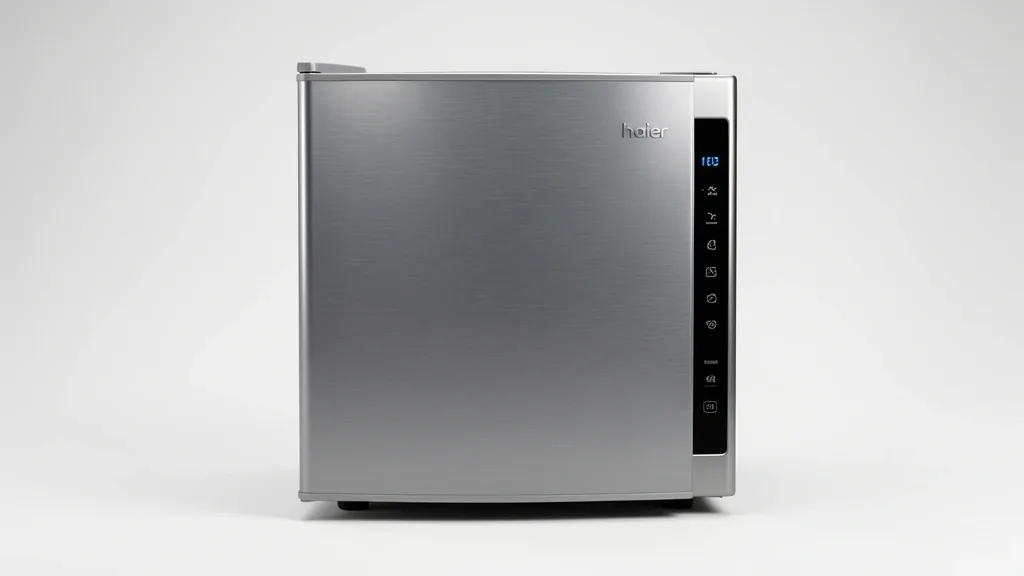
Optimizing your haier mini fridge settings isn’t about guessing; it’s about understanding the mechanics of compact refrigeration. Many people treat these small units like full-sized kitchen fridges. That’s a mistake. Compact models lack the sophisticated cooling duty cycles of large appliances, meaning they respond intensely to ambient heat and airflow limitations.
Key Takeaways
- Haier mini fridges use sensitive bimetallic sensors that react to external room temperatures rather than rigid internal thermostats.
- Dial numbers represent “on-time” intervals for the compressor, not specific degree values.
- Consistent performance relies on proper ventilation and tight door seals—not just the position of the dial.
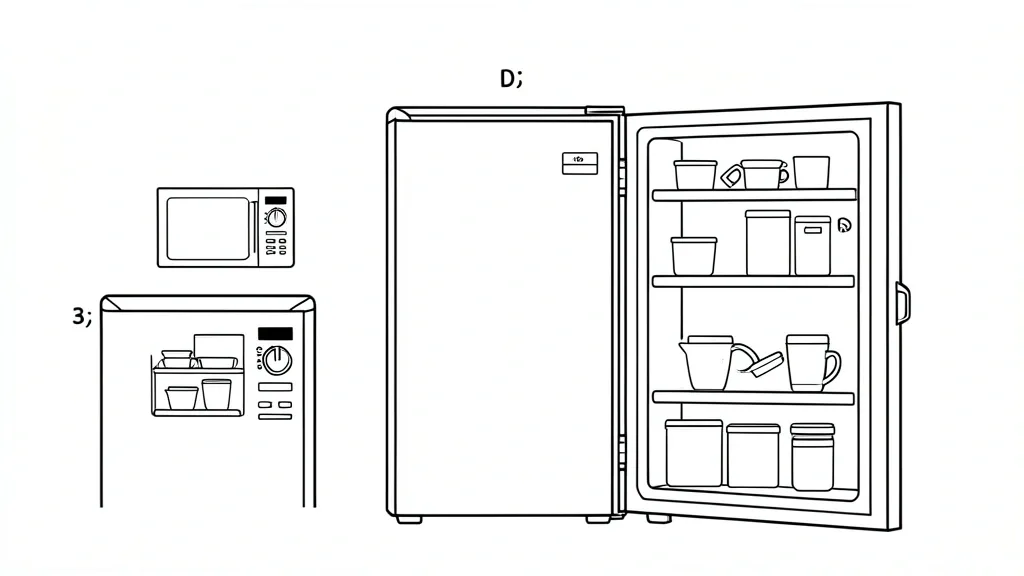
Technical Overview of Haier Thermostat Systems
Most Haier compact units rely on a bimetallic thermostat. Inside, a metal strip expands and contracts based on the temperature near your evaporator coils.
When you turn the dial higher, you’re tightening a spring against that bimetallic link. This forces the compressor to run longer before the spring physically snaps the contact point open. Essentially, these dials are duty-cycle timers, not precision temperature controllers.
Higher-end digital Haier models use thermistors (NTC sensors). These translate thermal resistance into digital signals for more accurate cycling. Regardless of whether yours is mechanical or digital, the logic remains: if your room gets hot, your fridge temperature will drift upward.
These units don’t have forced-air fans. They rely on direct heat exchange. When the compressor kicks on, the evaporator coils chill rapidly. If you think the unit has stopped cycling, unplug it for ten minutes. This allows the bimetal strip to reset to an ambient state and discharges the internal circuitry.
For a deeper look at small-format thermodynamics, check out these principles of industrial refrigeration.
Diagnostic Matrix: Evaluating Cooling Performance
Don’t trust the factory dial markings; they are often arbitrary across different production runs. To get an accurate reading, place a digital thermometer inside a glass of water on the middle shelf. Let it sit for 24 hours. The water provides thermal mass, preventing erratic readings from door openings.
| Symptom / Error | Possible Cause | Quick Check | Resolution |
|---|---|---|---|
| Warm air | Compressor relay failure | Check for click/hum | Replace relay or reset |
| Ice build-up | Humidity/Gasket leak | Check door seal gaps | Defrost and clean seals |
| High power draw | Ambient temp stress | Monitor room conditions | Relocate unit |
| Warm food/drinks | Poor airflow | Check baffle obstruction | Rearrange items |
Ambient temperature matters. If your room hits 85°F, a unit set to “Medium” will often struggle to stay below 45°F. Keep your unit in a cool, climate-controlled space for the best results.
Excessive ice on the evaporator coil acts like insulation. It forces the compressor to work overtime, often leading to a stuck relay. If you see thick ice, clear it out. Also, leave at least an inch between your food and the back wall. Blocking the air path prevents convective cooling.
If your unit stays above 50°F on the ‘Max’ setting despite having proper airflow, you likely have a refrigerant leak. Since these units are sealed systems, this usually means it is time for a replacement.
Critical Prerequisites for Accurate Temperature Control
Before you touch the dial, check your setup. If the compressor can’t “breathe,” it can’t cool efficiently.
You need at least 4 inches of clearance on every side. Cramming a fridge into a tight cabinet causes the unit to re-absorb its own hot exhaust, keeping the compressor running constantly.
Make sure the unit is level. These fridges use gravity for drainage; if it leans, water pools, freezes in the wrong places, and damages your door gasket.
Use the “dollar bill test” for your door seals. Close the door on a dollar bill. If you can pull it out with no resistance, the gasket is leaking. Warm, humid air will enter, hit the cold coils, and cause rapid icing.
Do not place these fridges on carpet. Carpet insulates the bottom of the unit, trapping heat from the compressor. Use a hard surface like tile or a specialized stand. For food safety, remember that the FDA mandates keeping refrigerated items below 40°F.
Step-by-Step Workflow for Dial Calibration
Achieving Thermal Equilibrium
Food safety requires an internal temperature between 34°F and 38°F. Follow this process to lock in your settings without the guesswork.
Step 1: Set a Baseline. Set the dial to the midpoint (usually 3 or 4). Avoid rushing straight to the maximum setting, as this only encourages ice build-up.
Step 2: Load Management. Keep the fridge roughly 70% full. Use a digital thermometer in a glass of water on the center shelf to track the *actual* temperature.
Step 3: The 24-Hour Wait. Let the unit run for a full day. These small systems have high thermal inertia. Adjusting the dial every few hours will only force the fridge into a “hunting” cycle that never stabilizes.
Step 4: Fine-Tune. After 24 hours, check your reading. If it’s above 40°F, notch the dial toward “Max” by one-quarter turn. If below 32°F, notch it toward “Min.” Repeat only after another 24-hour cycle.
Emergency Recovery and Compressor Reset
Procedures for Compressor Stalls
If the compressor stops running, it might just be the overload protection relay tripping. Try this reset protocol before calling for service.
The “Hard Reset” Protocol
Step 1: Power Isolation. Unplug the unit. Don’t just turn the dial to “Off.” The system needs to be completely de-energized.
Step 2: Thermal Discharge. Leave it unplugged for at least 45 minutes. This lets refrigerant pressure equalize, making it easier for the compressor to start again.
Step 3: Coil Maintenance. While it sits, use a vacuum to suck dust off the condenser coils at the back or bottom. Dust acts like a blanket, trapping heat.
Step 4: Direct Power. Plug it directly into a wall outlet. Avoid extension cords, which cause voltage drops that prevent the compressor from turning over.
Step 5: Silent Observation. Let it run empty for 6 hours. If it doesn’t cool down after 12 hours, the issue is likely mechanical.
Common Pitfalls in Load Management
Airflow Dynamics and Thermostat Deception
The “Wall Frost” Myth: Pushing food against the back wall doesn’t cool it faster—it actually hurts the fridge. The cooling plate is back there. Blocking it tricks the thermostat into thinking the box is colder than it is, causing the compressor to shut off while the rest of your food stays warm.
The “Air-Buffer” Requirement: Keep an inch of space around items. Think of the fridge as a small convection loop. Air needs to move freely to keep temps even. A jammed fridge creates warm “dead spots” where bacteria thrive.
Long-Term Thermal Efficiency Care
Maintenance Schedule
Treat your fridge well and it can last 5-7 years.
Quarterly Coil Cleaning: Dust the coils every three months. It’s the easiest way to prevent motor burnout.
Door Seal Inspection: Use the dollar bill test monthly. If the seal goes bad, your electric bill goes up and your food goes bad.
Defrost Routines: If you see more than 1/4 inch of ice, it’s time to defrost. Never use knives to chip at the ice; you will likely puncture a refrigerant line and kill the fridge instantly. Use a bowl of hot water inside with the door closed to melt it safely.
📌 Save to Pinterest
Frequently Asked Questions
What is the ideal numerical setting for a Haier mini fridge?
The midpoint, usually 3 or 4, is the standard starting point. Because these units vary by model and environment, rely on a standalone thermometer for the final word.
Why is my Haier mini fridge freezing my food even on the lowest setting?
You are likely pushing items against the back wall, where the cooling plate sits. Move your items forward to allow air to circulate.
How does ambient room temperature affect my mini fridge’s thermostat?
These units are very sensitive. External heat penetrates the thin walls, forcing the compressor to cycle more often. If the room is hot, the fridge will struggle to maintain low temperatures.
What should I do if my fridge compressor runs constantly?
First, check the door gasket for leaks. Second, vacuum the back coils to clear dust. If it’s still running constantly, it may not be able to dump heat effectively due to poor ventilation.
Does the ‘off’ setting on my dial actually disconnect power?
On most models, it cuts the compressor and the light, but it is not a safety switch. Always pull the plug before cleaning or performing maintenance.