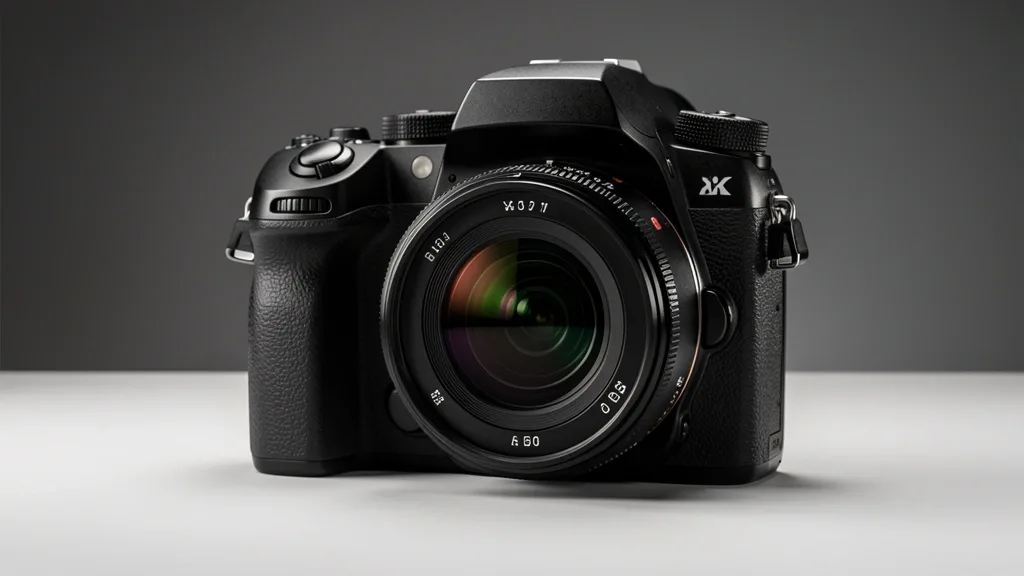
Mastering Arsenal camera settings requires a sharp understanding of how intelligent hardware bridges the gap between raw optical data and post-processing readiness. The Arsenal system acts as a high-speed intermediary, offloading complex computational tasks from your camera’s processor to an external module. This boosts DSLR shutter control and real-time aperture priority optimization without ever compromising the integrity of your sensor’s RAW output.
Key Takeaways
- The Arsenal hardware works as a real-time data bridge, using an intelligent exposure engine to calculate precise dynamic range adjustments.
- System stability hinges on a clean handshake between the USB-OTG physical connection and your smartphone app.
- Firmware synchronization is mandatory for modern mirrorless sensor compatibility and advanced focus stacking.
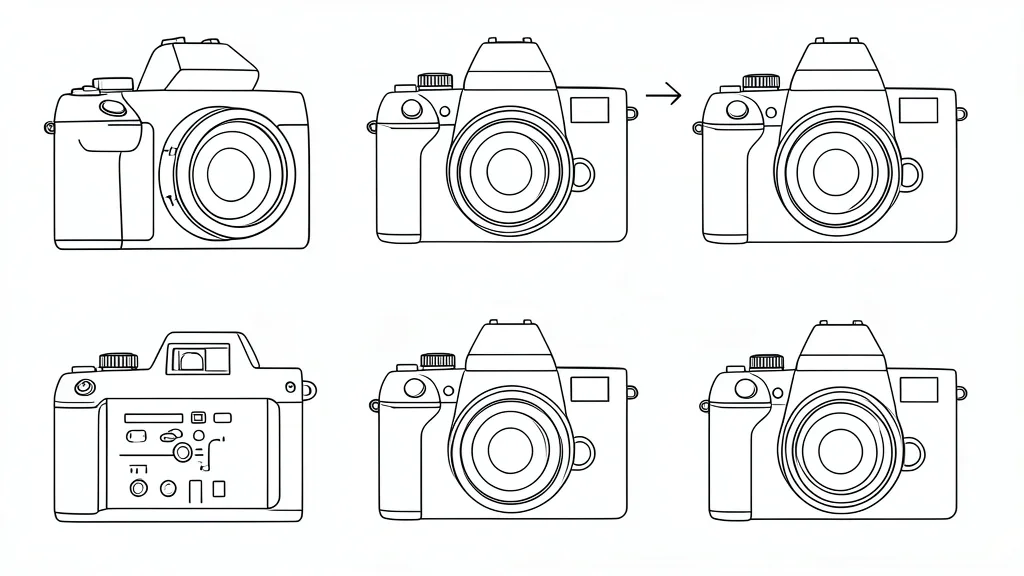
Technical Overview of Arsenal Hardware
Arsenal hardware sits as an external unit that intercepts the communication stream between your camera and your phone. By acting as a dedicated photography assistant, the device constantly monitors the environment’s brightness, contrast, and depth-of-field. It effectively removes the guesswork from challenging long-exposure configurations.
At its heart, the device uses a proprietary chip to manage DSLR shutter control. Unlike a basic static intervalometer, this unit is a dynamic decision-making node. It feeds live histogram data through its onboard processor, which then tweaks ISO, shutter speed, and aperture in real-time to match your surroundings.
When you engage the system, it offloads the heavy lifting from your camera’s internal CPU. This enables complex focus stacking parameters that would otherwise overwhelm standard internal firmware. By using an intelligent exposure engine, the hardware ensures your light levels stay balanced, preventing clipped highlights or crushed shadows.
The device functions as a real-time interpreter. It communicates via the PTP (Picture Transfer Protocol) to translate your intent into mechanical commands for the sensor. This interaction is vital for serious photography where dynamic range adjustment needs to happen in milliseconds to ensure every frame in a bracketed series aligns for perfect HDR fusion.
Because the hardware operates outside the camera’s native environment, it bypasses the limits of standard menu systems. This allows for aperture priority optimization that accounts for diffraction-limited focal lengths. You get the sharpest possible image regardless of the lens-camera pairing. It is a refined layer sitting right on top of your existing gear.
The Diagnostic Matrix for Optimal Performance
Achieving system stability requires a solid, unbroken handshake between your Arsenal unit, your camera body, and the mobile app via a 2.4GHz or 5GHz wireless link. If any point in this chain fails, your AI-assisted settings will default to manual or disconnected.
The primary diagnostic matrix addresses common frustration points. Many users encounter “ghosting” or dropped connections because the USB-OTG negotiation fails to bridge the gap between the camera’s terminal and Arsenal’s Linux-based kernel. Always ensure your camera’s “Auto-Power Off” feature is set to “Off” or “Infinity” to keep that handshake alive.
| Symptom / Error | Possible Cause | Quick Check | Resolution |
|---|---|---|---|
| App shows “Camera Not Found” | USB-OTG handshake failure | Check cable seating | Swap to a genuine data cable; skip “charge-only” cables. |
| Intermittent shutter lag | High smartphone CPU load | Monitor background apps | Clear cache and reduce preview FPS in app settings. |
| Failed focus stacking | Misaligned focal planes | Check lens AF/MF switch | Set lens to Manual Focus (MF) before firing. |
| Dropped long exposure | Camera power saving mode | Check “Auto-Off” timer | Disable all power-save timers in the menu. |
In Manual mode (M), the Arsenal app acts as a remote supervisor, restricted by your camera’s internal hardware. In semi-auto modes like aperture priority (A/Av) or shutter priority (S/Tv), the device exerts more granular control, injecting its AI-derived settings into your camera’s metering logic for superior exposure balancing.
Connection drops often stem from Wi-Fi congestion. Because Arsenal creates its own local access point, interference from nearby smart home devices can degrade the link. To resolve this, keep mobile data turned off on your smartphone while the app is active. This prevents the phone’s OS from jumping to a more stable internet source, which kills the app’s control connection.
Essential Prerequisites and Connection Steps
Initial camera sensor calibration is mandatory so the AI understands your specific camera-lens combination. Before mounting the unit, verify that your camera firmware is current. Many modern mirrorless systems require specific PTP communication patches often missing from launch-day firmware.
The USB cable is your lifeline. You need a high-quality, shielded cable capable of full data throughput. Cheap, unshielded cables are the #1 cause of “USB communication error” messages. Stick to a short cable run—ideally under 12 inches—to minimize electromagnetic interference that can distort smart remote shutter signals.
Firmware synchronization is the final hurdle. When you first launch the app, it will check for unit-side firmware updates. Do not interrupt this. If the device firmware doesn’t match your camera body, the AI won’t recognize your ISO steps or dynamic range capabilities, essentially turning the device into a dummy remote.
For mirrorless users, ensure “Exposure Simulation” is disabled. If it is active, the camera may try to override Arsenal’s inputs, creating a constant struggle between your human intent and the camera’s internal display settings. Once these steps are clear, you can initialize the intelligent exposure engine.
Finally, confirm that your camera’s “USB Connection Mode” is set to “PC Remote” or “PTP,” not “Mass Storage.” If the camera tries to mount as a drive, the Arsenal controller cannot access the low-level processing commands needed to trigger the shutter or aperture.
Step-by-Step Workflow for Intelligent Exposure
1. Automated Aperture Calibration
Place your camera on a rock-solid tripod to kill parallax error. Select “Live View” in the Arsenal app and tap the “Aperture” icon. Choosing “Auto-Aperture” kicks off the handshake protocol. For landscape shots, the system prioritizes smaller apertures (f/8–f/11) to maximize depth. If your lens has a physical aperture ring, unlock it so the system can maintain digital control via the electronic mount. Look for the green notification bar; it confirms the system has mapped your lens’s “sweet spot” for edge-to-edge sharpness.
2. Shutter Speed Balancing
Shutter speed automation is the heart of the system. In the “Exposure Settings” tab, toggle “Smart Shutter” to “On.” The system runs two test exposures in 60 seconds. First, a low-light frame detects shake thresholds. Second, it calculates the “Motion Blur” limit based on your focal length. If you are shooting handheld, the system boosts shutter speed to fight micro-vibrations. For long exposures, use “Long Exposure Mode”; the app stacks multiple shots to mimic a neutral density filter without needing extra glass.
3. ISO Stabilization Workflow
ISO management acts as a “noise-floor gatekeeper.” In the “ISO Management” menu, set your “ISO Ceiling.” For a modern full-frame sensor, 3200 is fine; for micro-four-thirds, cap it at 800. The AI constantly evaluates the light-to-shadow ratio. If it senses too much noise in shadow recovery zones, it automatically pivots to a longer shutter speed instead of pushing the ISO higher. This keeps your sensor data clean and high-fidelity for post-processing.
Emergency Recovery and Connectivity Troubleshooting
1. Forced Power Cycle and Hardware Reset
If your Arsenal unit stops responding, do not just cycle the power. Perform a “Hard Reset.” Use a paperclip to press the recessed pinhole button for 12 seconds until the LED flashes red and blue. This wipes the immediate cached network settings. Next, go to your phone’s Bluetooth settings—not the app—and “forget” the “Arsenal-XXXX” device before attempting to reconnect.
2. Application Cache Clearing
If the app gets stuck on a “Syncing” screen, your local cache is likely mangled. On Android, go to Settings > Apps > Arsenal > Storage > Clear Cache. iOS users must uninstall the entire app to purge old configuration files. Always restart your phone after this to clear lingering background processes. Reinstall and grant all location permissions; these are required for the Bluetooth Low Energy (BLE) handshake.
3. Diagnosing Unresponsive Hardware Indicators
A flashing yellow light means the unit is stuck in a firmware update loop. A solid red light means a thermal shutdown. If you see solid red, unplug everything and give the unit 20 minutes to cool down in a ventilated area. Don’t charge it while it’s overheating. If you get a “USB Connection Error,” check for bent pins in your cable. Always use the original shielded cable, as cheap third-party options lack the bandwidth for high-res previews.
Avoiding Common Pitfalls in AI Settings
A frequent error is “Conflicting Manual Override.” When Arsenal AI is active, it needs total control over the exposure triangle. If you manually tweak the shutter speed on the camera body while the app is in “Smart Mode,” you create a race condition. The AI detects your input, tries to compensate, and causes oscillation—creating annoying flicker in your timelapses. Stick to the app interface, or switch the app to “Manual Mode” if you need specific control.
Focus mode selection is another common trap. You cannot use “Continuous AF” (AF-C) for focus stacking; it is fundamentally incompatible. Set your lens to “Manual Focus” (MF) using the physical switch on the barrel. This allows Arsenal to take over the lens’s motor electronically. If you leave it in AF-C, the camera’s internal drive will fight the AI’s requested focal planes, causing “Focus Accuracy Fail” errors.
Never ignore “Battery Drain” warnings. The Arsenal unit draws power directly from your camera’s battery. Your camera’s battery health will drop significantly faster than during standalone shooting. Never start a long session with less than 60% charge. For sessions lasting over two hours, an external AC power adapter (dummy battery) is the only way to ensure you don’t lose your connection due to voltage sag.
Long-Term System Care and Maintenance
Routine firmware updates are vital for longevity. Arsenal releases them to patch support for newer models like the latest Sony or Canon mirrorless bodies. When a notification pops up, use stable Wi-Fi and keep the unit plugged into a power source. Never kill the app or the camera during the process. If you do, you will need to perform the “Emergency Reset” procedure.
Proper storage is essential. Keep the USB ports free of dust, which acts as a static conductor. Store the device in a climate-controlled area; high humidity can oxidize the data pins and lead to connection drops. When you travel, use a hard-shell case. Don’t leave the unit permanently mounted to the hot-shoe while in your gear bag, as rotational torque can stress the USB tether. Detach it and store it safely in an anti-static pouch.
📌 Save to Pinterest
Frequently Asked Questions
How does the system determine focus distance for long exposures?
Arsenal uses distance mapping via the lens CPU and sensor analysis. It identifies the “Infinitely Sharp” point by racking the focus motor across the entire range and measuring contrast variance. Once it hits the peak, it locks those coordinates for the duration of the long exposure.
Why is my phone failing to connect via Bluetooth?
This is usually caused by “stale” Bluetooth handshakes. Toggle your phone’s Bluetooth off and back on, and verify the Arsenal isn’t linked to another device nearby. Ensure the app has “Location Services” permissions enabled, as modern smartphone OS versions require this for the BLE handshake protocol.
Does using Arsenal affect RAW image quality?
No. Arsenal does not touch the RAW data. It simply provides metadata instructions—shutter, aperture, and ISO—to the camera. The camera writes the RAW file to your card just as it always does. The quality and dynamic range remain exactly as the sensor captured them.
How can I manually override the aperture suggested by the AI?
Enter the “Manual Control” tier in the Arsenal app. Go to the camera icon, select “Exposure Mode,” and switch from “Smart/Auto” to “Manual.” In this mode, the AI’s suggestions act only as a visual reference, allowing you to slide the aperture setting to whatever your creative vision requires.
What are the best practices for battery management?
Since the unit drains your camera battery, treat your power levels with caution. For sessions over an hour, use an AC power adapter or a high-capacity external power bank. Also, keep your phone at 100% charge, as constant data transmission and “Live View” rendering on your phone screen will deplete its battery faster than standard camera apps.